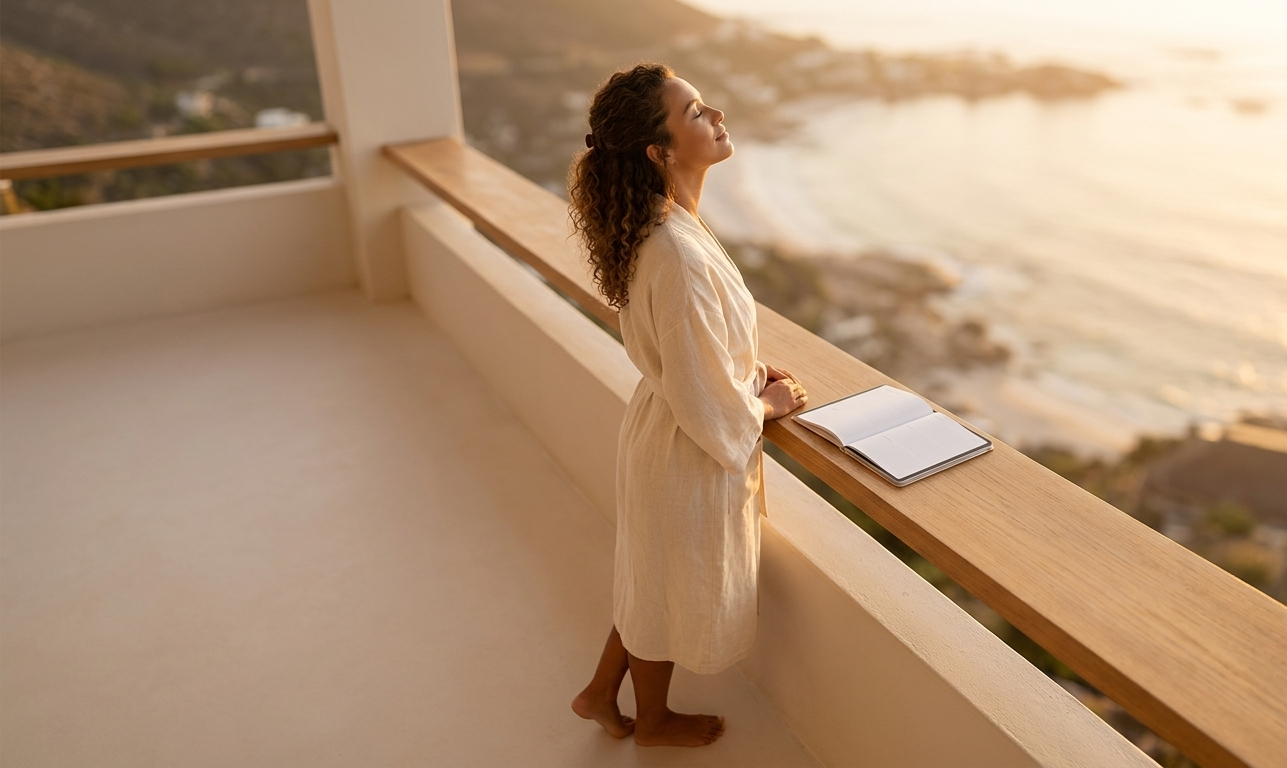
I know this feeling so well. That particular kind of exhaustion that doesn't come from being lazy — it comes from being a modern human. We live indoors under artificial light, we stare into glowing screens until midnight, and then we wonder why our bodies refuse to power down gracefully. The truth is, our bodies haven't changed in thousands of years. They still run on an ancient, sun-based schedule. And when we drift too far from that schedule, everything suffers — our sleep, our mood, our focus, our hormones.
The good news? You don't need an expensive supplement or a complicated biohacking routine. You need the sun. And I'm going to show you exactly how to use it.
The Modern Disconnect: Why You're Tired but Can't Sleep
Our bodies operate on a circadian rhythm — a roughly 24-hour internal clock that governs nearly every biological process, from sleep and waking to hormone release, digestion, and even mood. This clock is exquisitely sensitive to one thing above all else: light.
In the natural world, bright morning sunlight rises and dims evening light signals our body to prepare for sleep. But modern life has flipped this entirely. We wake to dim indoor lighting, spend our days under flat artificial fluorescent bulbs, and then flood our eyes with the intense blue-wavelength light of phones, laptops, and televisions right before bed.
The result? Our brains are genuinely confused about what time it is. Researchers call this "social jetlag" — a state where our internal clock is chronically misaligned with the actual time of day. It's exhausting, depleting, and entirely reversible.

The Science Made Simple: Light as Your Master Reset
Here's what happens in your brain the moment light hits your retina:
- Morning light suppresses melatonin (your sleep hormone) and triggers the release of cortisol — not the stress hormone, but the alertness hormone that wakes your body, sharpens your focus, and gets you ready to thrive.
- As the day progresses and light dims, your brain begins building melatonin back up, gradually preparing your body for deep, restorative sleep.
- Evening artificial light — especially the blue wavelengths from screens — tricks your brain into thinking it's still daytime, suppressing melatonin production for hours and making it nearly impossible to fall into deep sleep naturally.
The beautiful simplicity of this system is that you don't need to change your sleep habits — you need to change your light habits. Work with your biology instead of against it, and your body will do the rest.
On an overcast day, outdoor light is still 10–50 times brighter than typical indoor lighting. Even filtered through clouds, morning sunlight contains enough signal to anchor your circadian clock. Step outside anyway.
The Sun Protocol: Four Steps to Reset Your Biological Clock
This is not a complicated routine. It is four gentle, intentional moments with light — morning, midday, evening, and night. Each one sends a specific signal to your nervous system that, over time, transforms the quality of your sleep from the inside out.

Step 1 — Morning Light (The 30-Minute Window)
This is the single most powerful habit in this entire protocol. Within the first 30 minutes of waking, go outside and expose your eyes to natural light for at least 10–15 minutes. If it's cloudy or overcast, extend this to 20–30 minutes.
You don't need to stare at the sun. Simply being outdoors — having a coffee on your balcony, walking to a nearby park, or sitting by an open window — is enough to anchor your circadian clock for the entire day. Think of it as the most impactful item on your morning wellness checklist.
Use your morning sunlight window as a time to review your daily intentions or journal pages in your digital planner. The combination of natural light, fresh air, and intentional planning is genuinely powerful — it aligns both your biology and your mindset for the day ahead.
Step 2 — Midday Light Break
Your cortisol curve has a natural secondary peak in the early afternoon — and a brief midday light break helps sustain it. Even 5–10 minutes outside around noon keeps your energy levels steady, reduces the dreaded 3 pm slump, and reinforces your body's understanding that yes, it is still daytime.
Step away from your screen. Take a short walk. Sit on a bench. Let the light touch your face. This tiny act has an outsized effect on your afternoon focus and your evening wind-down.
Step 3 — Sunset Alignment (The Golden Hour Effect)
This one is deeply underrated — and it is also the most beautiful. Watching the sunset, or simply spending time in the warm amber light of the late afternoon, signals your nervous system that the day is ending. The low-angle, red-shifted light of the golden hour is rich in wavelengths that actively prepare your body for the transition into rest.

Try to spend at least a few minutes outside — or near a west-facing window — during the 30–60 minutes before sunset. It is a quiet, beautiful ritual that connects you to the natural rhythm of the day in a way that no supplement can replicate.
Step 4 — Evening Light Boundaries (Protecting Your Melatonin)
Starting 2 hours before your intended bedtime, begin winding down your light environment deliberately. This is where small changes create the biggest transformation in your sleep quality.
- Dim overhead lights and switch to warm, low lamps or candlelight.
- Activate night mode or reduce screen brightness on all devices.
- Wear blue-light blocking glasses if you need to use screens in the evening.
- Avoid the bright lights of supermarkets, gyms, or brightly lit environments close to bedtime.
Your goal is to create an environment that looks like the natural world at dusk — warm, dim, and quiet. This allows your melatonin to rise naturally, so that by the time your head touches the pillow, your body is genuinely, biologically ready to sleep.
Your Sun Protocol at a Glance
Here is a simple summary of the four steps, the ideal timing for each, and what's happening in your body behind the scenes:
| Time of Day | Action | Biological Benefit |
|---|---|---|
| Within 30 min of waking | 10–30 min of outdoor natural light exposure | Anchors circadian clock · suppresses residual melatonin · triggers cortisol alertness peak |
| Midday (12–2 pm) | 5–10 min outdoor break in natural light | Sustains afternoon energy · reinforces daytime signal · reduces 3 pm energy crash |
| Late afternoon / sunset | Time in golden-hour light outdoors or near a window | Signals nervous system that day is ending · begins melatonin pre-production · promotes calm |
| 2 hours before bed | Dim all indoor lights · eliminate blue-light screens | Maximises natural melatonin rise · lowers core body temperature · prepares body for deep sleep |

Your New Morning Ritual
The Most Luxurious Thing You Can Do for Your Sleep Costs Nothing
Sleep is not a passive event. It is the result of a whole day's worth of biological signals, and sunlight is the most powerful signal of all. When you step outside each morning — even for ten quiet minutes — you are doing something profoundly kind for your body. You are telling it: I see you. I am working with you, not against you. And tonight, your body will answer with the deep, restorative sleep you have been craving.
Start with just one step — tomorrow morning, take your coffee outside. Let the sun find your face. The rest will follow. With ease and intention, always.
