
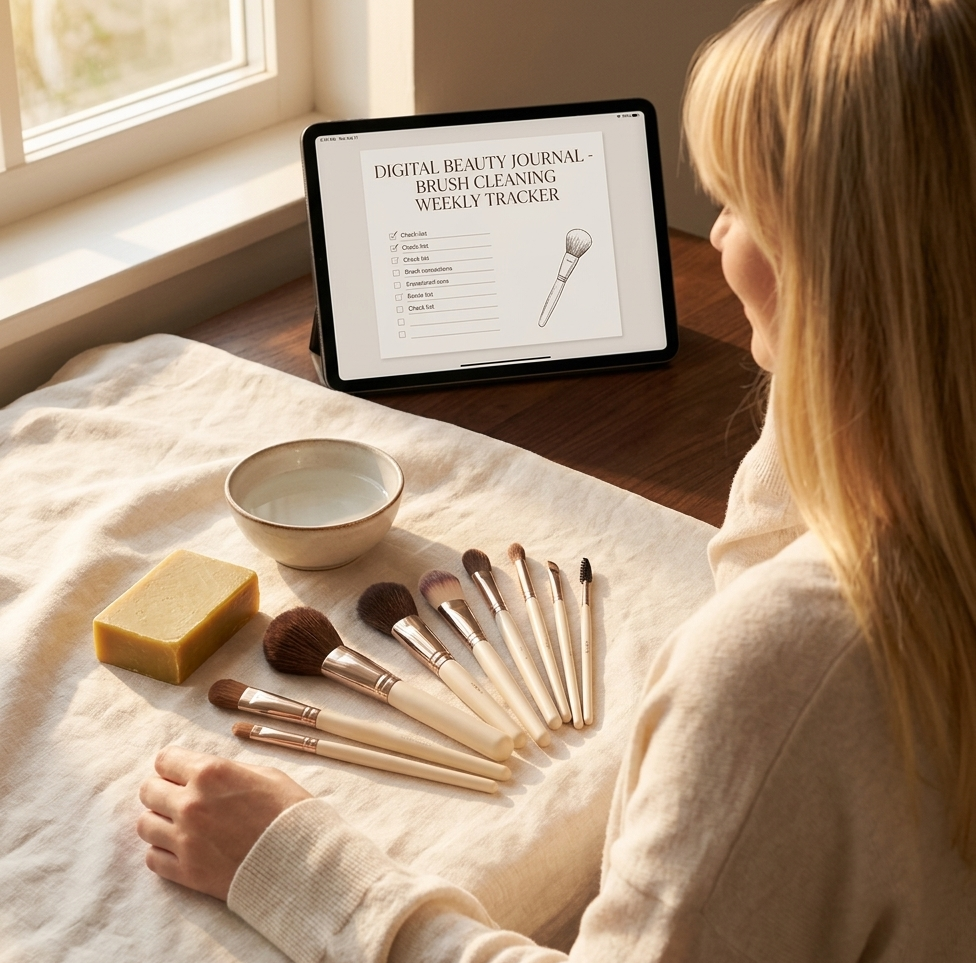
I know how this feels. You spend real time and real money building a skincare routine that is supposed to protect your skin. You layer your vitamin C, your moisturiser, your SPF — and then you pick up a brush that has been sitting on your vanity for three weeks, loaded with old foundation, dead skin cells, and bacteria, and press it right into your freshly prepared skin.
It is a frustrating cycle. And the good news is, it is one of the easiest ones to break. Cleaning your makeup tools is not just a hygiene task — it is an act of respect for your skin, your products, and your ritual. Let me show you exactly how to do it right.
The "When": How Often Should You Actually Clean Your Tools?
The frequency depends on the type of tool and the texture of the product it applies. Wet and creamy formulas trap far more bacteria than dry powders — so those tools need more attention.
After every use, or at minimum 2–3 times per week. Sponges are porous and hold moisture — which makes them the perfect environment for bacteria to grow. This is non-negotiable if you want to avoid breakouts.
Foundation, concealer, and cream blush brushes should be cleaned once a week. These work with wet formulas that cling to bristles and build up quickly, creating a film that affects both your skin and your application.
Powder, bronzer, blusher, and eyeshadow brushes can wait a little longer — every two weeks is perfectly fine. Dry formulas are less hospitable to bacteria, but product build-up still affects performance and colour payoff over time.

The "How": A Step-by-Step Cleaning Ritual
Think of this not as a chore, but as a reset — a few quiet minutes dedicated entirely to caring for the tools that care for your face. Here is how to do it properly.
You do not need anything fancy. Baby shampoo or a solid olive oil soap are both ideal — they cut through makeup residue and oils without stripping or damaging the bristles. Avoid harsh dish soaps or anything with heavy fragrance, as these can degrade the glue holding brushes together over time.
This step is critical and often skipped. Always keep the brush head pointing downward while rinsing. Water that seeps up into the ferrule (the metal band that holds the bristles) will loosen the glue over time and cause bristles to shed. Lukewarm water is gentler on bristles than hot water, which can also break down the glue and warp the shape of the brush head.
Work a small amount of cleanser into the bristles by swirling the brush on your clean palm or on a silicone cleaning mat. Use small, gentle circles — never scrub roughly, as this misshapes the bristles. For sponges and BeautyBlenders, squeeze the cleanser in gently and work it through. Never dig your nails into the foam to scrub — this creates micro-tears that shorten the life of your sponge and leave it harbouring more bacteria than before.
Keep rinsing — bristles still pointing down — until no colour or product residue remains. If the water is still tinted, add a touch more cleanser and repeat the swirling step. Leaving soap or pigment trapped in the bristles will irritate your skin and affect the performance of your next application.
Treat your brushes the way you treat your own hair — with care, the right products, and patience. The same tools you invest in for better makeup deserve the same mindful attention you give your skin.

The Golden Rule of Drying
Cleaning your brushes correctly is half the battle. Drying them incorrectly can undo all your work — and ruin a good brush faster than anything else.
Never dry your brushes upright in a cup or holder. Water will trickle down into the ferrule and loosen the glue, causing bristles to fall out over time. And please — no heat. Hair dryers might seem like an efficient shortcut, but the heat distorts bristle shape and breaks down the adhesive holding everything together.
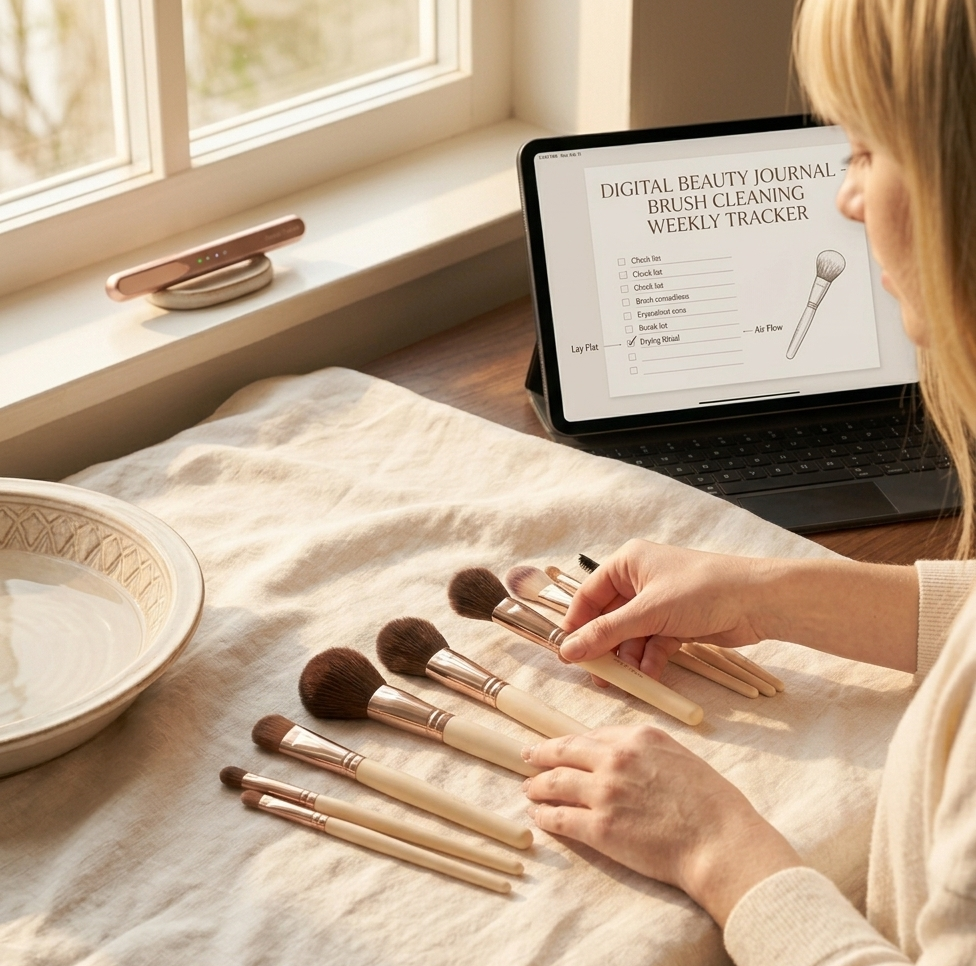
The correct method is simple: after squeezing out the excess water with a clean towel, lay your brushes flat on a dry towel with the bristle end slightly elevated or angled downward. This allows gravity to pull any remaining moisture away from the ferrule while the bristles dry in their natural shape. Leave them overnight and they will be perfectly dry and ready to use by morning.
For sponges, gently squeeze out all excess water and set them on a clean towel in a well-ventilated spot — never in a sealed bag or container while still damp.
Keep a small note in your digital beauty planner with the date you last cleaned each category of brush. It takes ten seconds to log, and it completely removes the guesswork — so your tools are always performing at their best.
The Real Reward: Why It All Matters
Clean brushes do more than protect your skin from bacteria and breakouts. They also transform the quality of your makeup application. When bristles are free of old product build-up, your foundation blends more smoothly, your eyeshadow pops with true pigment, and your blush sits exactly where you place it — with none of that muddied, patchy finish that comes from dirty tools.
This is soft productivity at its most beautiful: a small, intentional act that quietly upgrades everything around it.
Your Beauty Reset
Give Yourself 10 Minutes This Week
Set a gentle timer, put on something you love to listen to, and give your brushes and sponges the reset they deserve. Log it in your beauty tracker, lay your tools out to dry, and wake up tomorrow knowing your ritual is truly clean — from your skincare all the way to your tools. You will feel the difference. Your skin will too.
By EaseOnMe
