

I want to ask you something honest: when you think about exercise, what's the first feeling that surfaces? For so many of us, it's dread. It's guilt. It's a mental image of forcing ourselves through something we don't actually enjoy, just to earn back some sense of being "good enough."
That feeling? It's not weakness. It's the very predictable result of a culture that has sold us the idea that movement only "counts" if it hurts. The "no pain, no gain" mindset has quietly convinced us that our bodies are projects to fix rather than homes to cherish — and it's left a lot of us stuck in a cycle of short bursts of effort followed by guilt and exhaustion.
But there is another way. A softer, more sustainable, more genuinely beautiful way. It's called Joyful Movement — and it might just change everything.
What Is Joyful Movement?
Joyful Movement is not a fitness plan. It doesn't come with a schedule, a calorie target, or a leaderboard. It's a mindset — a gentle shift in the way you relate to your body and the way it needs to move each day.
At its heart, Joyful Movement is about celebration, not correction. Instead of asking "How do I fix my body?", it asks "What does my body enjoy?" Instead of pushing through pain, it invites you to listen. It treats movement not as something your body has to earn, but as something it naturally desires — when we stop making it feel like a chore.
This isn't about going easy on yourself or abandoning health goals. It's about finding the forms of movement that make you feel truly alive — and doing those, consistently, because you love how they feel.

Why Changing Your Mindset Changes Everything
Here's the truth about consistency: it doesn't come from willpower. It comes from joy. When we dread something, we naturally resist it — and no amount of motivation can override a deeply held sense of resentment toward an activity.
But when we stop fighting our bodies and start working with them, something remarkable happens. Movement starts to feel like a conversation rather than a battle. We begin to notice what energizes us, what calms us, what brings us alive. And we start to choose those things — not because we have to, but because we genuinely want to.
Research consistently shows that people who exercise for joy rather than obligation are far more likely to stay active long-term. The key isn't the perfect workout. It's the right relationship with your body.
Sustainable movement is not born from guilt — it's born from genuine care for yourself. Every time you choose to move because it feels good, you are reinforcing a beautiful new pattern.
How to Welcome Joyful Movement Into Your Life
Ready to begin? Here are four soft, practical ways to invite more Joyful Movement into your daily rhythm.
Pair Movement with Something You Already Love
One of the easiest ways to make movement feel less like a task is to combine it with something you genuinely enjoy. Walk while listening to a podcast that makes the time fly. Do a gentle yoga flow while your favorite playlist plays softly in the background. Stretch while catching up on a show you love. Movement becomes associated with pleasure — and your mind stops resisting it.
Create a "Sample Platter" — No Pressure
Rather than committing to one form of exercise immediately, give yourself permission to explore. Think back to what brought you joy as a child. Was it dancing? Swimming? Walking in nature? Riding your bike? Reconnect with those memories, and give yourself full permission to try things playfully and without attachment to the outcome.
You're not auditioning for a gym routine — you're rediscovering what your body loves. There's a beautiful freedom in that.

Make It Social
Sharing movement with someone you care about — a friend, a partner, even a beloved pet on a walk — shifts the entire energy of the experience. The goal is no longer "I must perform." It becomes "I get to connect." That shift alone can dissolve much of the anxiety we associate with exercise.
It doesn't need to be formal. A weekend morning walk with a friend. A slow dance class you giggle through. A gentle outdoor yoga session in a park. Joy multiplies when it's shared.
Move at Your Own Beautiful Pace
Please hear this: everyone begins as a beginner. The most magnetic thing you can do is release the comparison and simply show up for yourself, exactly as you are right now. Your pace is valid. Your starting point is valid. And every gentle step you take is already enough.
Listening to What Your Body Needs
Joyful Movement also means learning to listen — to distinguish between the productive challenge of growth and the clear signal of exhaustion or pain. Your body speaks to you constantly. The practice is learning to hear it.
Health guidelines generally suggest aiming for around 150 minutes of moderate movement per week — that's just over 20 minutes a day. But "moderate" doesn't mean grueling. A useful guide is the "talk test": if you can hold a light conversation while moving, you're in the right zone. A brisk walk, a slow dance, a peaceful swim — all of these count, beautifully.
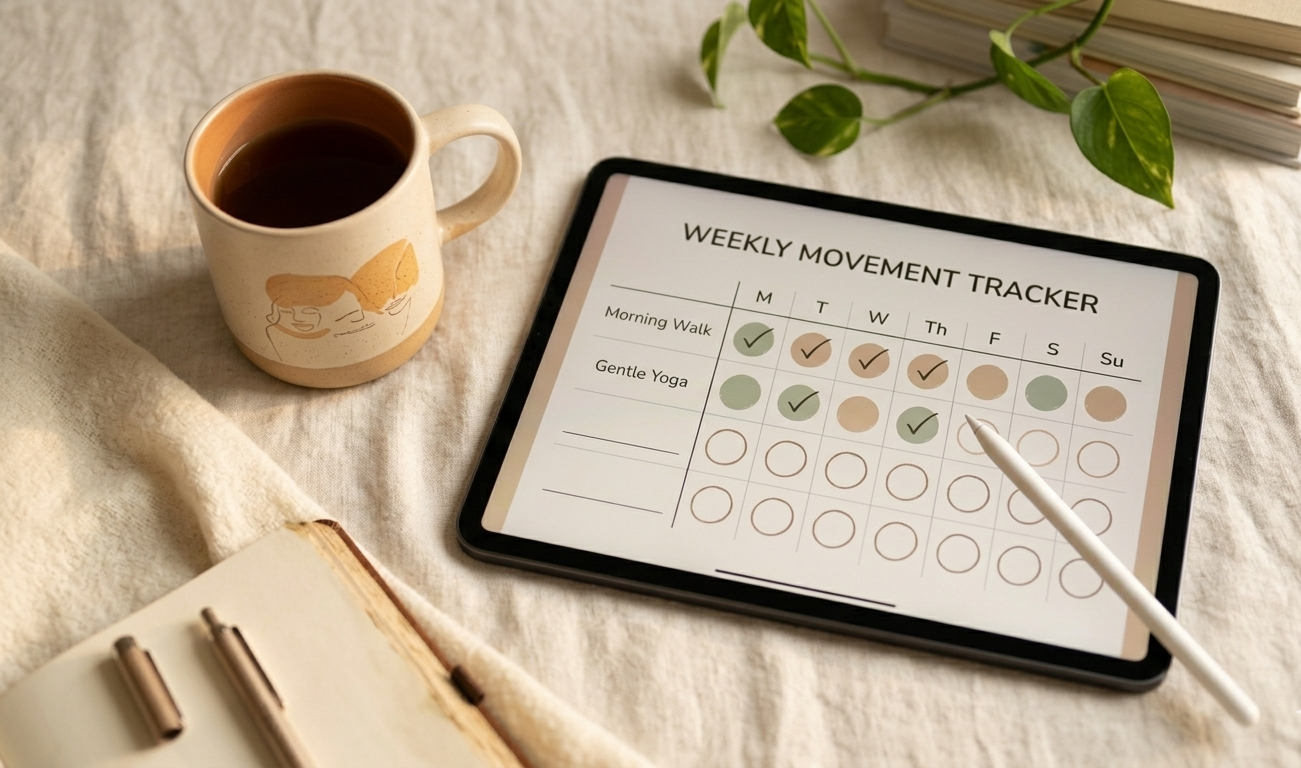
Some days your body will ask for something energetic. Other days it will whisper for rest or a slow, quiet stretch. Joyful Movement means honoring both with equal grace. Rest is not failure — rest is part of the rhythm.
Set a small, gentle intention: 20 minutes of movement each day that genuinely appeals to you. Keep a simple note — even a line in your daily planner — of how each session felt. You'll start to see your own map of joy forming.
Movement Can Be Quiet. Movement Can Be Slow.
We have been taught that movement must look a certain way to be valuable. Sweaty. Intense. Structured. But some of the most transformative moments of movement are the quiet ones — a slow morning walk where you actually notice the light, a gentle stretch before sleep, a dance in your kitchen while making tea.
These moments matter. They are not "less than." They are, in many ways, the most sustainable form of movement there is — because they fit seamlessly into a life you already love.
Your Invitation
Move Because You Love Your Body, Not Because You Fear It
Start small. Start gently. Put on a song that lifts you and simply move — however feels right in this moment. There are no rules here, only an open invitation to reconnect with the quiet joy of being alive inside this body of yours. You don't need to earn movement. You already deserve it.
You are not a project to be fixed. You are a person who deserves to move through life with ease, pleasure, and deep kindness toward yourself. Start there, and everything else will follow.
