

We have all been there. The butterflies, the effortless first conversations, the feeling that this person just gets you. And then, months or years later, you find yourself worn down by the same disagreements. Not about small things — but about what life is actually for.
That wearing-down is not a sign that love has failed. It is often a sign that two people who liked each other very much were actually building on different foundations. And even the most beautiful house cannot stand without the right ground beneath it.
What Are Core Values — And Why Do They Matter More Than Compatibility?
Surface-level compatibility is easy to spot. You love the same films. You both enjoy quiet evenings over loud parties. You share a taste for slow Sunday mornings. These things are lovely — and they matter — but they are not what sustains a relationship through the seasons that actually test it.
Core values are the deeper operating system running beneath all of that. They are the beliefs and priorities that guide how you make decisions, how you handle conflict, what you sacrifice for, and what you simply will not negotiate on. Think of them as your internal compass — the invisible force that points you toward what you consider a life well-lived.
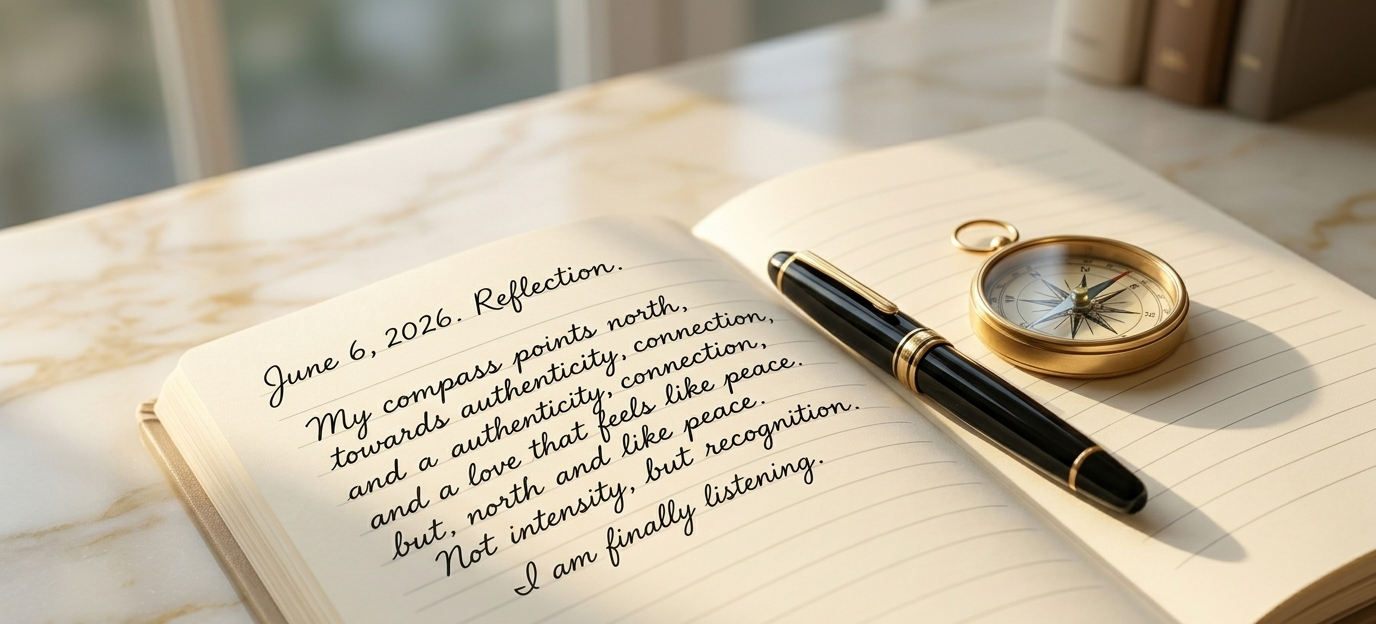
Some of the most important core values to look at in a relationship include:
- Money and financial philosophy — Do you both save instinctively, or does one of you feel money is for living fully right now?
- Family and children — Do you share the same vision of what family looks like, how close it stays, and what role it plays?
- Career and ambition — Are your rhythms compatible? Can one person's drive coexist peacefully with the other's desire for stillness?
- Communication style — Do you both believe in naming hard things, or does one of you retreat into silence?
- Personal growth — Are you both committed to becoming, or is one of you content to stay exactly as you are?
None of these are right or wrong. But misalignment here creates friction that never fully resolves — because it is not a misunderstanding you can simply talk through. It is two different answers to the question: What is life for?
Why Alignment Equals Peace
When your core values are genuinely aligned with your partner's, something remarkable happens. The big decisions — where to live, how to manage money, whether to have children, how to spend your energy — become conversations rather than battles. You may not always agree on the details, but you are rowing in the same direction.
This is what I call relationship peace. Not the absence of conflict, but the presence of a shared foundation that makes conflict feel navigable. You are not defending your entire worldview every time a disagreement arises. You are simply two people who see life similarly, working out the practical details together.

Mutual support also deepens here. When you share core values, you naturally celebrate the same wins. You mourn the same losses. You prioritise the same things without having to constantly explain yourself. That invisible understanding is not just comforting — it is freeing. It allows both of you to grow without outgrowing each other.
Differences in personality, interests, or daily habits are beautiful and enriching. It is the differences in what you believe life is for that create lasting friction. Learn to tell the two apart.
How to Identify a Partner's Core Values
People rarely announce their core values directly. What they do is reveal them through their stories, their reactions, and their choices. Here is how to listen for them.
Listen to what they talk about with energy
Pay attention to what your partner talks about with genuine enthusiasm or deep concern. The topics that light someone up — or that they return to again and again — are almost always connected to what they value most. A person who speaks passionately about their family is showing you something important. So is a person who rarely mentions them at all.
Ask "what if" questions
Hypothetical questions are one of the most revealing tools in a relationship. "What would you do if you received a large inheritance?" "What would your ideal life look like in ten years?" "If your career and our relationship ever conflicted, how would you think about that?" These are not interrogations — they are invitations. And the answers will tell you far more than any direct question about values ever could.
Observe how they behave under stress
A person's core values become most visible when something goes wrong. Do they become more controlling or more generous? Do they communicate or shut down? Do they reach for support or disappear into themselves? Stress is not a flaw — it is a window. What you see through that window is far more reliable than what you see during easy, lovely moments.

Soft Productivity in Love: Thriving Together Through a Stable Foundation
The Soft Productivity philosophy is built on one core belief: that peace is not a reward for achievement — it is the foundation from which achievement becomes possible. And that is as true in love as it is in every other area of life.
When your relationship is built on genuine value alignment, you stop spending energy managing the relationship itself. You stop negotiating your worth. You stop defending your direction. That freed energy does not disappear — it flows toward your growth, your creativity, your joy, your shared life.
A relationship that requires you to constantly fight for it is a relationship that costs you everything else. A relationship built on alignment is one that gives you everything you need to thrive — not just within it, but far beyond it.
You deserve a love that feels like ground beneath your feet. Not a storm you keep standing in because the lightning is beautiful.
YOUR REFLECTION RITUAL
Begin With Yourself
Before you can recognise value alignment in another person, you need to know your own compass. Take a quiet moment this week — with a journal and a cup of something warm — and write down the five values you would never negotiate on. Not what you think you should value. What you actually do. That clarity is where everything begins.
You are not asking too much when you want a love that feels like peace. You are simply asking for the right kind of love — and now you know exactly how to recognise it.
