
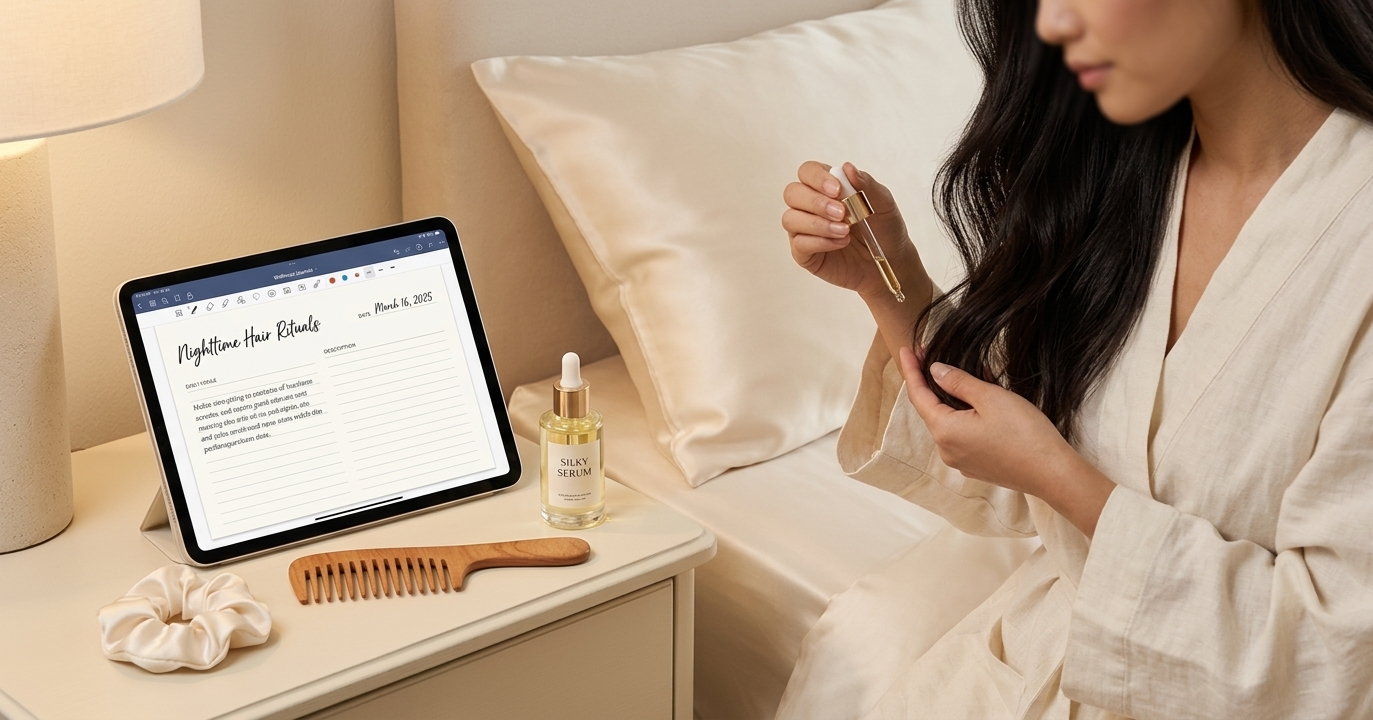
I know the frustration well. You spend real time and real money on your hair care routine, you deep-condition on Sundays, you try to be gentle — and still, you wake up to tangles, frizz, and that stubborn puffiness that no amount of product seems to fix.
Here's what most of us aren't told: the majority of hair damage happens at night. Friction against your pillow, moisture loss into the fabric, and hours of unconscious movement all quietly work against your hair while you sleep. The good news? A small, intentional nighttime ritual can completely change what you see in the mirror each morning.
Step 1 — Swap Your Pillowcase for Silk or Satin
This is the single highest-impact change you can make. A cotton pillowcase, however soft it feels, has a rough surface at the microscopic level. Each time your head moves during sleep, your hair fibers rub against those tiny fibres and create friction — leading to frizz, tangles, and over time, breakage.
Silk and satin are different. Their smooth surface allows your hair to glide freely, which means less friction, less static, and significantly less moisture being pulled out of your strands overnight. Your hair wakes up closer to how you left it.
If a silk pillowcase feels like a big investment right now, a satin one works beautifully and is far more budget-friendly. The key is the smooth surface — not the price tag.
Step 2 — Brush Gently Before Bed
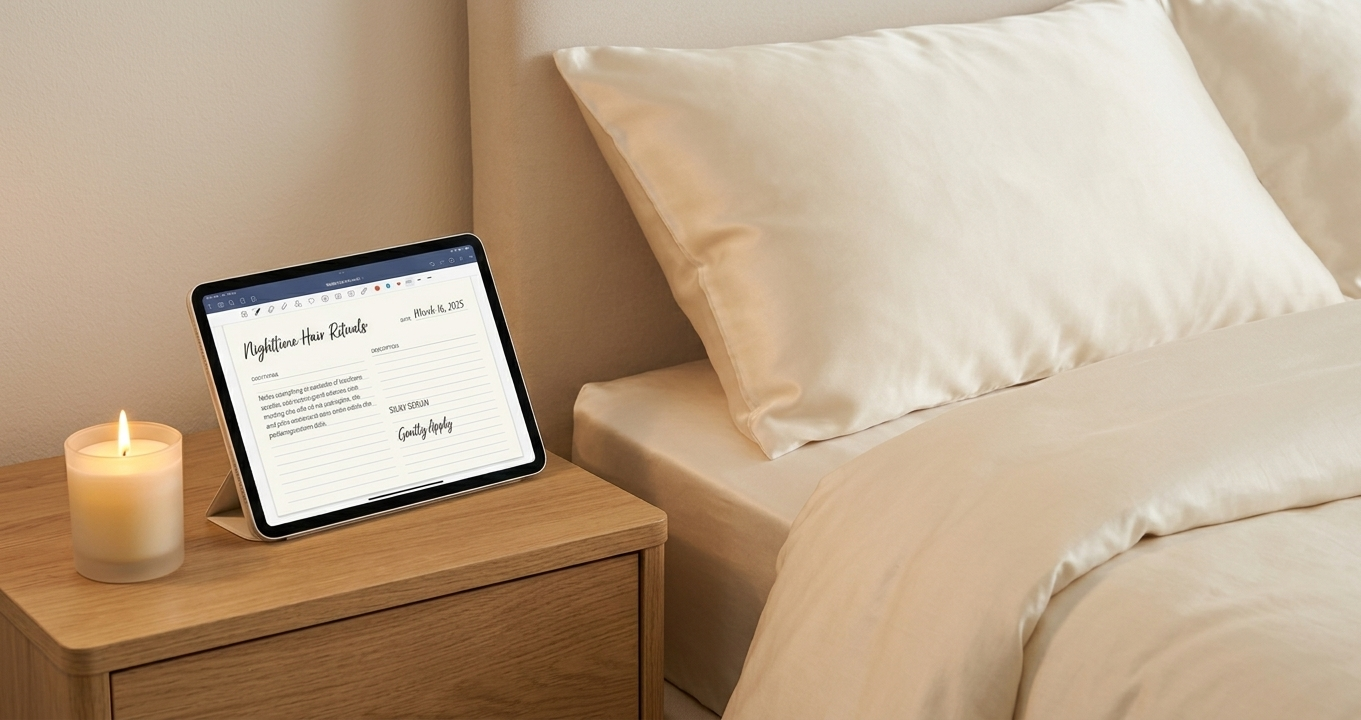
Going to sleep with tangled hair means those knots will only tighten and worsen overnight. When you wake up and try to detangle dry, knotted hair, you're applying far more force than necessary — and that's where breakage happens.
Take two minutes before bed to gently work through any tangles. Always start from the ends and work your way up — never drag a brush from root to tip through a knot. A wide-tooth comb or a soft paddle brush are your best friends here.
As a bonus, gentle brushing distributes your scalp's natural oils along the length of your hair — a free, built-in conditioning treatment your body produces every single day.
Step 3 — Apply a Light Overnight Serum or Hair Oil
Sleep is when your body does its deepest repair work — and your hair can benefit from that same window. Applying a small amount of hair oil or leave-in serum before bed allows the formula to work slowly and deeply through the night, without the heaviness you might feel if you wore it during the day.
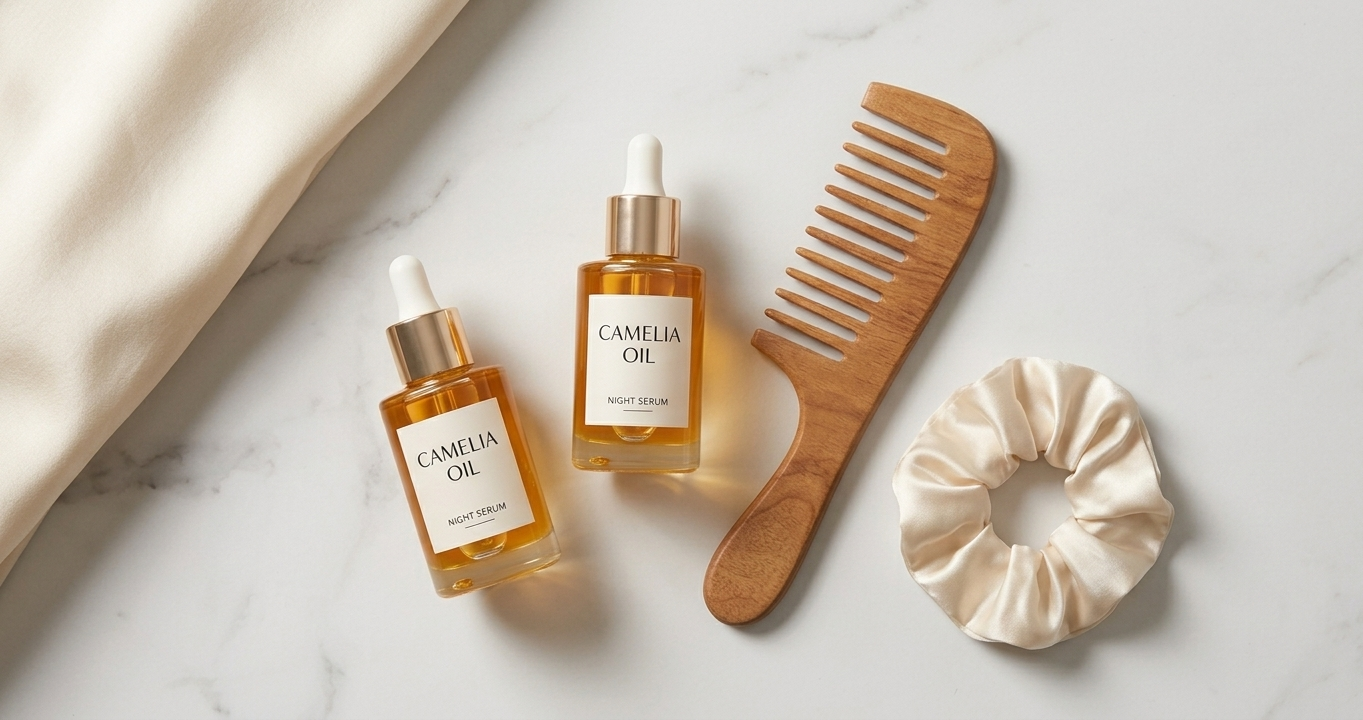
When choosing an overnight oil, reach for lightweight options that absorb well and won't weigh your hair down. Three that work beautifully for overnight use are pure argan oil, lightweight camellia oil, and sweet almond oil — all gentle, non-greasy, and deeply nourishing for the lengths and ends.
Apply only to the mid-lengths and ends — never directly to your scalp or roots. Applying oil to the scalp overnight can block hair follicles, encourage sebum buildup, and in some cases contribute to irritation or increased shedding. The ends are where your hair is driest and most in need of support. That is exactly where your oil should go.
Step 4 — Choose a Protective Sleep Style
Leaving your hair completely loose means it can spread across your pillow in every direction, creating tangles and friction all night long. But pulling it into a tight ponytail or topknot creates its own problem — tension at the root that can lead to breakage and even thinning over time.
The sweet spot is a loose, low braid or a soft "pineapple" bun gathered gently at the top of your head. This keeps your hair contained and protected without any stress on the hairline.
- For waves or curls: The pineapple bun is ideal — it preserves your natural texture beautifully.
- For straight hair: A loose single braid works wonderfully and creates a soft wave by morning.
- Hair tie rule: Use only silk or satin scrunchies. Elastic bands, even fabric-covered ones, can crease and snag your hair overnight.
Step 5 — Never Sleep with Wet Hair
This one is a firm rule, and it matters more than most people realise. When your hair is wet, each strand is in its most elastic and structurally weakened state. The internal protein bonds that give your hair its strength are temporarily loosened by water — meaning wet hair can stretch up to 30% beyond its normal length before it snaps. Under normal conditions, that elasticity is a good thing. But pressed against a pillow for hours, it becomes a liability.
The weight of your head, combined with the constant unconscious movement during sleep, causes wet strands to stretch, compress, tangle, and snap in ways that dry hair simply would not. The damage is not always immediately visible — but it accumulates. Over time, it shows up as increased breakage, rough texture, and hair that feels progressively weaker. For some people, consistently sleeping on wet hair also creates a warm, damp scalp environment that can become prone to bacterial or fungal irritation.
Give your hair at least one full hour to dry — ideally more — before going to bed. If you wash your hair in the evening, build the timing into your routine so drying is never rushed or skipped. Your hair will thank you in ways you can both see and feel.
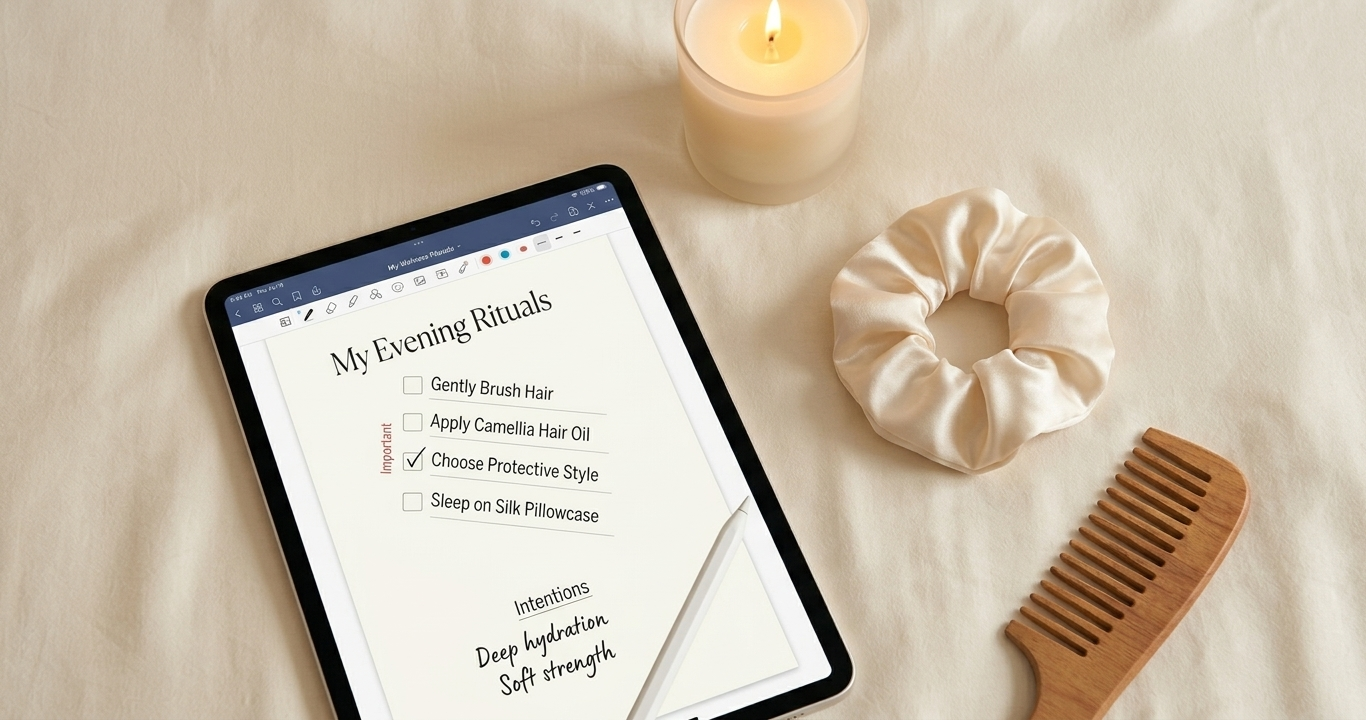
Your Nighttime Ritual
Small Habits, Lasting Transformation
You don't need to overhaul your entire life to see a difference. A silk pillowcase, two minutes of gentle brushing, a drop of oil, a soft braid — that's it. Do this tonight, and again tomorrow night, and your hair will begin to tell a new story. One of softness, strength, and quiet, consistent care.
Try it tonight. Wake up tomorrow and see what your hair looks like when you've actually taken care of it while you slept. — By EaseOnMe
