
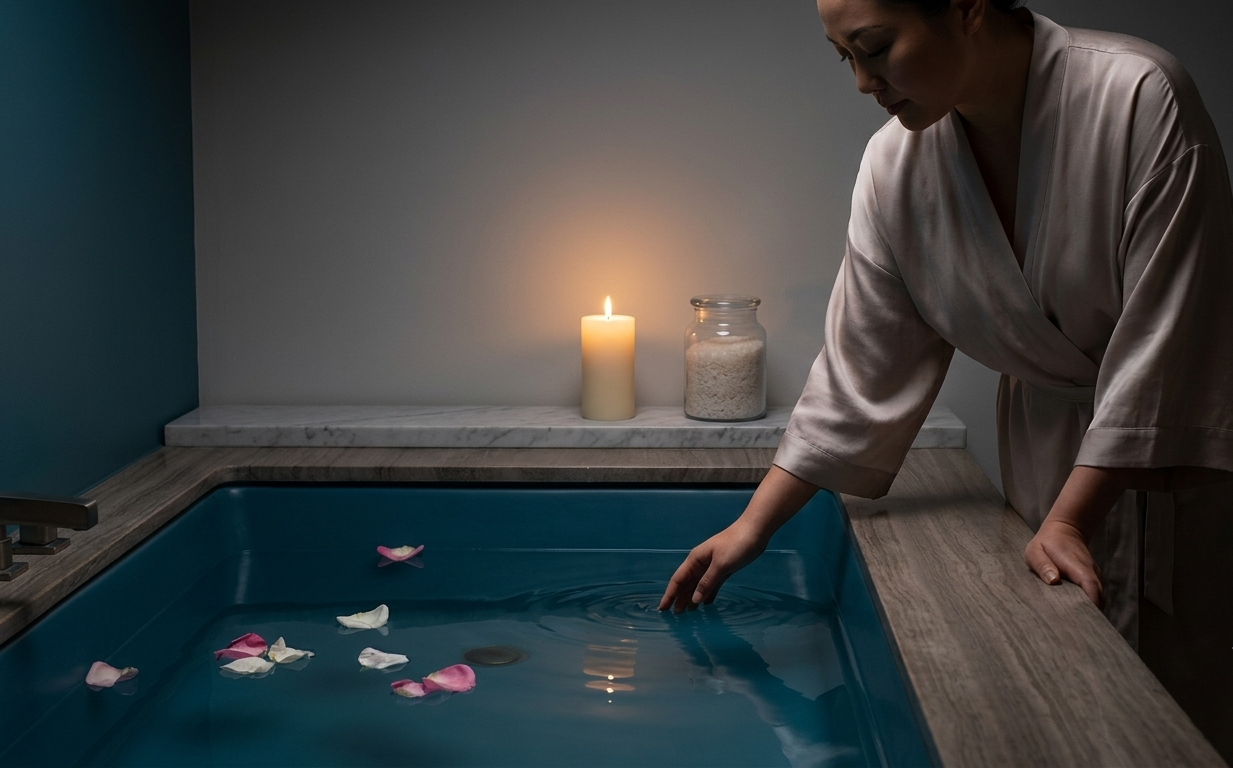
There are mornings when you drag yourself out of bed, your mind foggy and your body still half-asleep. And there are evenings when you carry the full weight of the day on your shoulders, tension sitting right behind your eyes.
What if the most powerful reset button you have is already in your bathroom? Water — its temperature, its pressure, its texture — is one of the oldest and most effective wellness tools we have. You just need to know which version to reach for.
The Cold Shower: Your Energetic Awakening
I know. The idea of cold water in the morning can feel like a small act of cruelty. But stay with me — because once you understand what it does to your body, it starts to feel like the kindest thing you can do for yourself.
When cold water (below 15°C / 60°F) hits your skin, your body activates an immediate cascade of responses. Your breathing deepens, your heart rate increases, and your body floods with norepinephrine — a natural hormone that sharpens focus, lifts mood, and builds mental resilience. Studies suggest this hormonal surge can persist for several hours after a cold exposure.
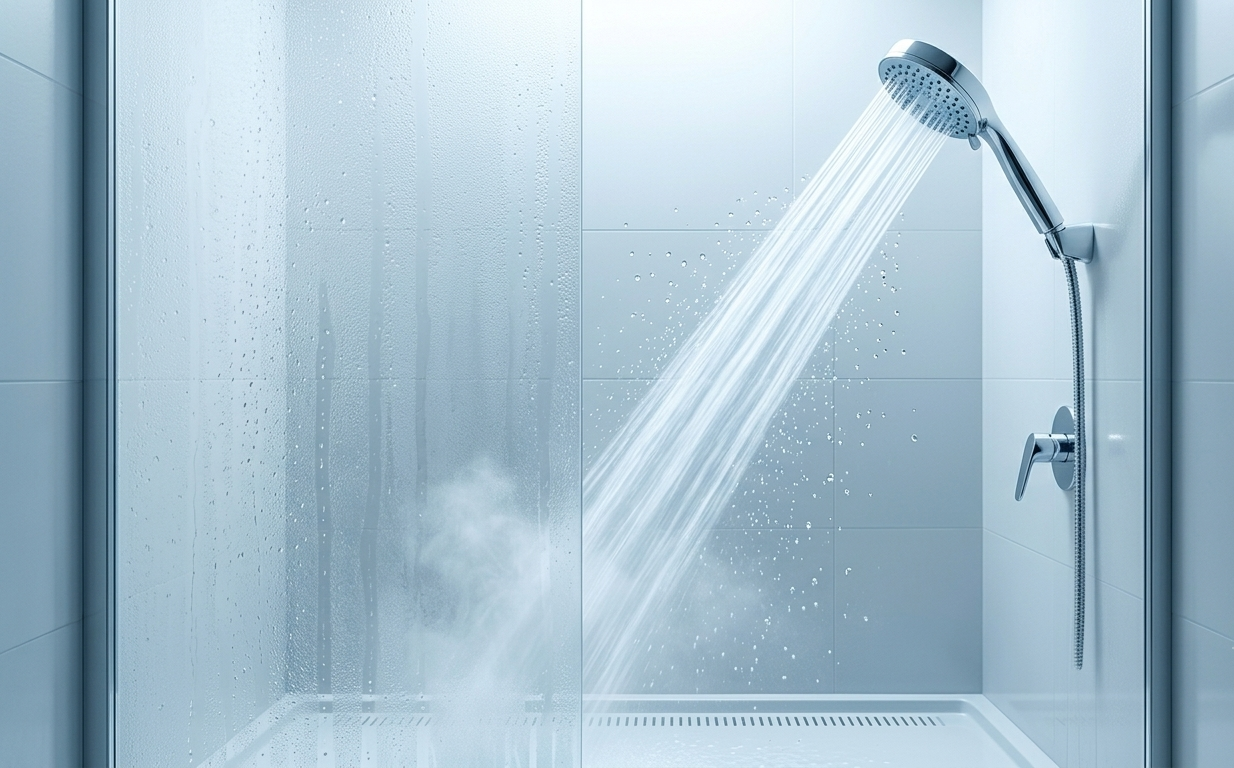
When to choose a cold shower
- In the morning, to wake your body and sharpen mental focus
- After a workout, to reduce muscle inflammation and speed recovery
- When you feel emotionally stuck, anxious, or mentally overloaded
- Before an important event where you need to feel calm and alert
How to do it right
You do not have to dive straight into an ice bath. The most sustainable approach is a warm-to-cold transition: shower at your normal temperature, then spend the final 30 to 90 seconds under cold water. Over time, increase the duration as your body adapts.
Take three deep breaths before turning the temperature down. Inhale through your nose for four counts, exhale through your mouth for six. This primes your nervous system and makes the cold feel significantly less intense. Aim for at least 30 seconds to feel the full benefit.
The Salt Bath: A Ritual for Deep Restoration
If the cold shower is an energetic ignition, the warm salt bath is a full-body exhale. This is your evening ritual — a deliberate act of putting down everything you have been carrying and allowing your body to release it.
Epsom salts (magnesium sulfate) dissolve in warm water and are absorbed through the skin, replenishing magnesium levels that are often depleted by stress, poor sleep, and busy lives. Magnesium is essential for muscle relaxation, nervous system regulation, and the production of melatonin — your sleep hormone.
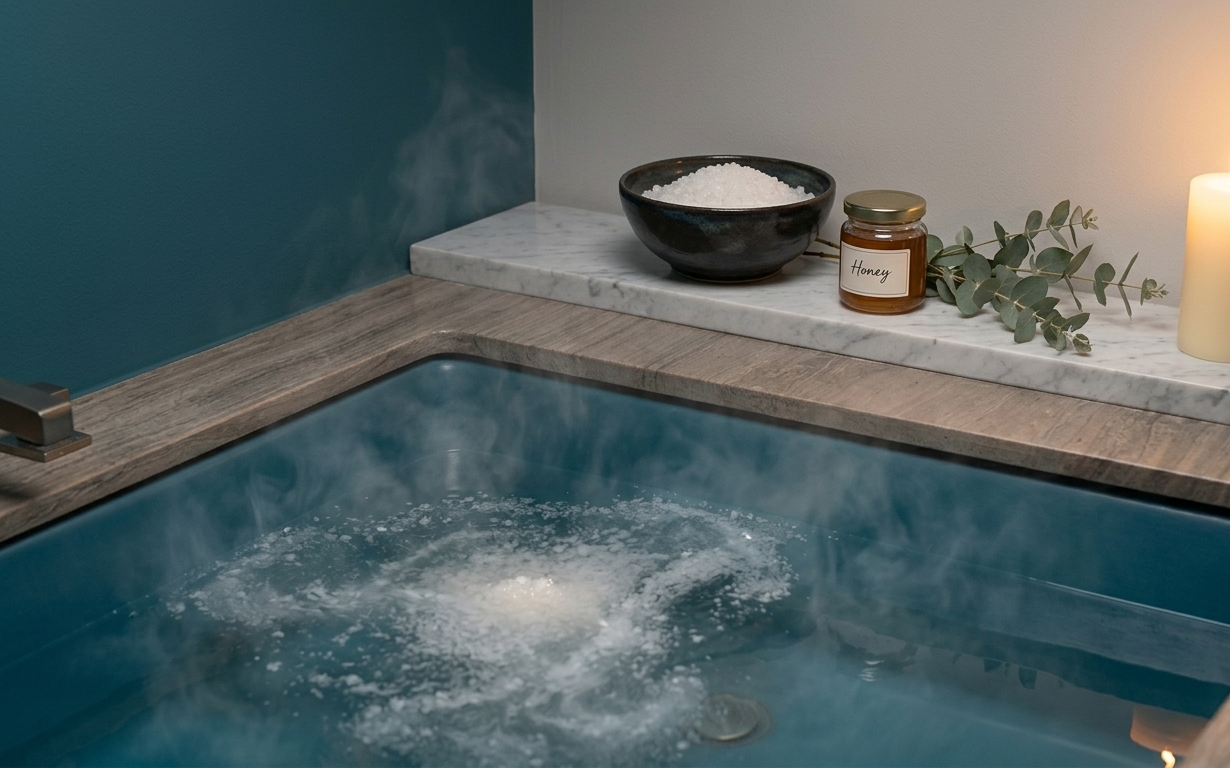
When to choose a salt bath
- In the evening, as part of your wind-down ritual before sleep
- After a physically demanding or emotionally draining day
- When muscles feel tight, achy, or fatigued
- When anxiety is elevated and you need grounding in your body
How to do it right
Fill your bath with warm water — not scalding, ideally between 37°C and 40°C (98°F–104°F). Add 2 cups of Epsom salts and stir until dissolved. Soak for a minimum of 20 minutes. You can enhance the ritual with a few drops of lavender essential oil, dim the lights, and place your phone in another room entirely.
Add a handful of dried rose petals or a eucalyptus branch to your bath for a spa-like sensory experience. The scent alone activates your parasympathetic nervous system — your rest-and-digest response — before you even step in. Drink a glass of water afterwards, as warm baths are gently dehydrating.
Cold vs. Warm: A Quick Comparison
Not sure which one to reach for today? This table makes the decision easy.
| ❄️ Cold Shower | 🛁 Salt Bath | |
|---|---|---|
| Best time | Morning or post-workout | Evening or before sleep |
| Duration | 30 seconds – 3 minutes | 20 – 40 minutes |
| Primary effect | Energy, focus, mental clarity | Relaxation, muscle recovery, sleep |
| Key benefit | Norepinephrine boost, reduces inflammation | Magnesium absorption, nervous system reset |
| How you feel after | Alert, alive, sharp | Soft, heavy (in the best way), calm |
| Ideal for | Mental performance, low energy, post-exercise | Stress relief, sore muscles, sleep preparation |
The Expert Upgrade: Contrast Therapy
What if you did not have to choose? Contrast therapy — alternating between hot and cold — is one of the most researched and powerful recovery techniques used by athletes and wellness practitioners alike.
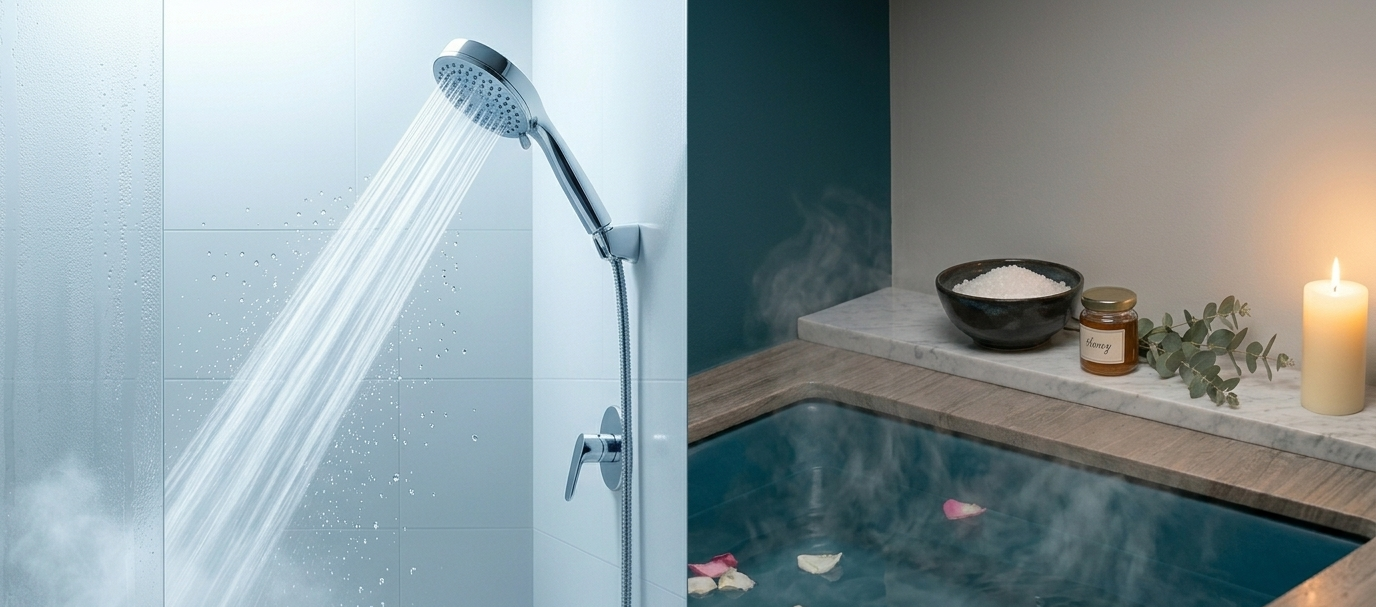
The alternation between heat and cold causes your blood vessels to dilate and contract repeatedly — effectively pumping metabolic waste out of your tissues while delivering fresh, oxygen-rich blood in. The result is reduced muscle soreness, improved circulation, and a deeply grounded sense of calm energy.
A simple contrast protocol to try at home
- Begin with 2 minutes of warm water (comfortable and relaxing)
- Switch to cold for 30 seconds (deep breaths, stay present)
- Return to warm for 2 minutes
- End on cold for 30 seconds — this is the most important step
Always end contrast sessions on cold. This closes capillaries, reduces post-session inflammation, and leaves your body feeling lighter and more energised. If you have cardiovascular conditions, consult your doctor before beginning cold exposure practice.
Your Water Ritual Awaits
Let Water Do What Wellness Has Always Known It Can
You already have access to one of the most powerful wellness tools on the planet — and it is flowing through your taps right now. Cold water when you need to rise. Warm salt water when you need to surrender. Both when you want to feel fully alive in your body. The ritual is yours to design.
Start with just one intentional shift this week — a cold 30 seconds at the end of your morning shower, or a quiet salt bath on Sunday evening. Notice how your body responds. It already knows exactly what it needs.
